3L magnetic stirrer capacity explained UK: A Practical UK Lab Guide
Direct UK answer first
In UK laboratory buying terms, 3L magnetic stirrer capacity explained UK means the stirrer’s stated class is intended for mixing aqueous-style loads around the three-litre mark—not a guarantee for every viscosity, vessel shape or heating duty. Capacity class is a practical planning figure; real usable volume depends on vessel geometry, liquid properties and how you set stirring and heat.
What the HS5C-class digital hotplate stirrer is for
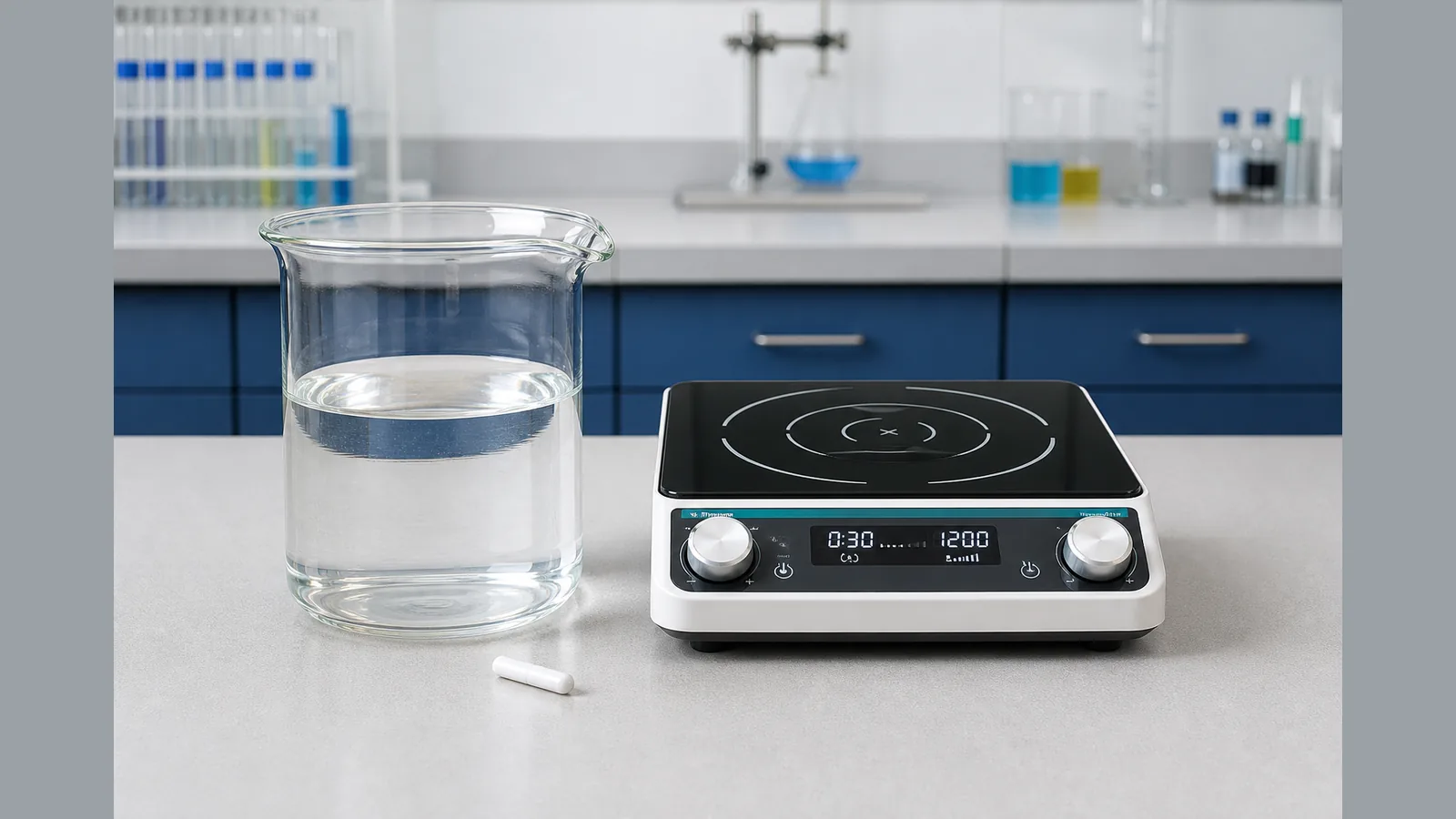
An HS5C-class digital hotplate stirrer combines magnetic agitation with a heated plate so you can mix and warm solutions in one setup. Magnetic stirrers use a rotating magnetic field to drive a stir bar inside the vessel, which helps deliver consistent laboratory mixing without an overhead shaft in many routine tasks.
Typical UK uses include preparing buffers, dissolving solids, and controlled heating of small-to-medium volumes where a sealed vessel and stir bar are preferred. For product context on the JOANLAB HS5C listing class discussed here, see the current product details.
Claim-safe specs: only listing-verified plate/RPM/probe facts
From the verified on-site listing text used for this guide, the JOANLAB HS5C digital hotplate stirrer is positioned with:
- a ceramic plate
- an external temperature probe
- a stated 3L class capacity
No maximum temperature or RPM figures are restated here beyond that verified listing text. Industry catalogues show that hotplate stirrers are offered across a wide range of stated stirring volumes (for example, some large-capacity models are marketed from roughly 10 L to 50 L water-equivalent capacity), which is why matching the stated class to your vessel and liquid—not copying another model’s numbers—matters when you compare units.
Safety and lab practice notes
Treat this as general lab-safety framing only. It does not replace your local COSHH assessment, standard operating procedures, or training. Before heating or stirring:
- Confirm vessel suitability for heat and magnetic stirring, and that the stir bar is free to rotate.
- Use the external temperature probe as intended by your procedure when closed-loop temperature control of the liquid is required.
- Keep the plate and vessel stable; avoid unattended heating of flammable or hazardous mixtures unless your SOP explicitly allows it.
- Stop and reassess if the stir bar decouples, the liquid foams or boils unexpectedly, or the vessel is overloaded relative to the stated capacity class.
Checklist or decision steps
- Define the working volume of liquid (not just vessel size) and whether 3L class is an appropriate planning fit.
- Check vessel footprint and base contact against a ceramic hotplate layout.
- Decide whether you need probe-based liquid temperature feedback for the method.
- Review your COSHH/SOP for heat, splash, and chemical compatibility before first use.
- Compare only listing-verified features when shortlisting; do not assume RPM or temperature limits from other brands’ datasheets.
Next step to product detail
If a ceramic-plate, probe-ready digital hotplate stirrer in the 3L class matches your method planning, review the full listing and ordering details on the JOANLAB HS5C digital magnetic stirrer hot plate (3L class) product page.
FAQ
Does “3L capacity” mean I can always stir three litres?
No. It is a stated capacity class for planning. Viscosity, vessel shape, fill height and stirring conditions can reduce the practical working volume.
Why mention ceramic plate and an external probe?
Those are the listing-verified features for the HS5C-class unit referenced here. They describe the plate material and the availability of an external temperature probe—not unverified performance claims.
Where can I read more about how magnetic stirrers work?
Independent explainers cover the rotating-field principle, main parts, and common laboratory uses; use those alongside your own risk assessment, not instead of it.