Closed loop probe control on magnetic stirrer UK: A Practical UK Lab Guide
Direct UK answer first
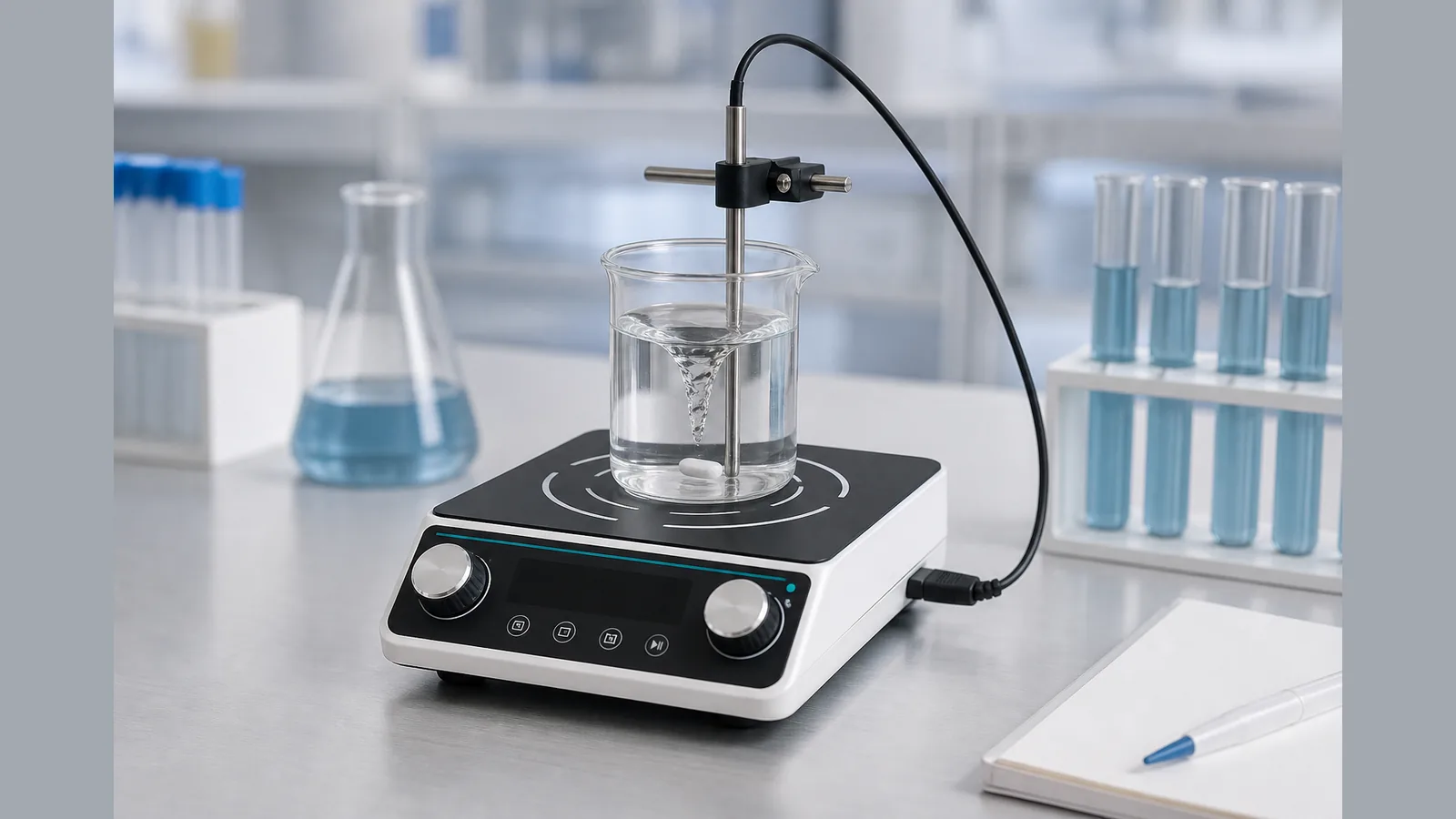
Closed loop probe control on magnetic stirrer UK setups typically means heating is guided by an external temperature probe in the sample, so the controller can adjust plate output toward the set temperature rather than relying on plate temperature alone. For UK labs choosing a compact digital hotplate stirrer, that probe feedback is the practical way to keep mixing and heating aligned under your local COSHH and SOP rules—without treating any product page as a substitute for those procedures.
What the HS5C-class digital hotplate stirrer is for
A hot plate magnetic stirrer combines two laboratory functions in one unit: magnetic stirring of liquids via a rotating magnetic field, and heating of samples on the plate. Hotplate stirrers are widely used where solutions need consistent heating and mixing together.
An HS5C-class digital unit sits in that category for routine bench work—dissolving, gentle reaction warming, or keeping a mixture uniform while temperature is monitored. Closed-loop probe control is relevant when the liquid temperature, not only the plate surface, is what your method cares about.
Claim-safe specs: only listing-verified plate/RPM/probe facts
Verified listing points for the JOANLAB HS5C digital hotplate stirrer are limited to what the product page states:
- Ceramic plate
- External temperature probe
- Stated 3L class capacity
Do not assume maximum temperature, stirring speed (RPM), or other performance figures beyond that verified listing text. If your method needs numeric limits, confirm them on the current product details page and in your lab’s own validation paperwork before use.
Safety and lab practice notes
Treat any guidance here as general lab framing only. It does not replace local COSHH assessments, written SOPs, training, or manufacturer instructions. Keep vessels stable on the ceramic plate, use a suitable stir bar, and place the external probe so it measures the liquid without fouling the stirrer or the vessel wall. Never leave heated mixtures unattended if your SOP forbids it, and allow hot surfaces to cool before handling.
Checklist or decision steps
- Confirm your method needs sample-temperature control (probe in liquid) rather than plate-only heating.
- Check vessel size against the stated 3L class capacity on the listing.
- Confirm the ceramic plate and external probe suit your solvents, glassware, and cleaning rules.
- Record setpoints and probe placement in your SOP; use confirmed details RPM or temperature ceilings from marketing copy.
- Review COSHH and spill/heat controls before first use.
Next step to product detail
To review the JOANLAB HS5C listing—including the ceramic plate, external temperature probe, and 3L class capacity—see the current product details for the digital magnetic stirrer hot plate (3L class).
FAQ
What does closed-loop probe control mean on a magnetic stirrer?
It means an external probe in the sample feeds temperature back to the controller so heating can track the liquid more closely than plate sensing alone. Exact control behaviour still depends on the instrument’s documented modes and your validated method.
Is the HS5C suitable for every UK lab method?
Suitability depends on vessel size within the stated 3L class capacity, chemistry, and your COSHH/SOP requirements. Use only listing-verified features (ceramic plate, external probe, 3L class) when comparing options.
Where can I check the live product facts?
Use the digital magnetic stirrer hot plate product detail page for the current on-site listing text.