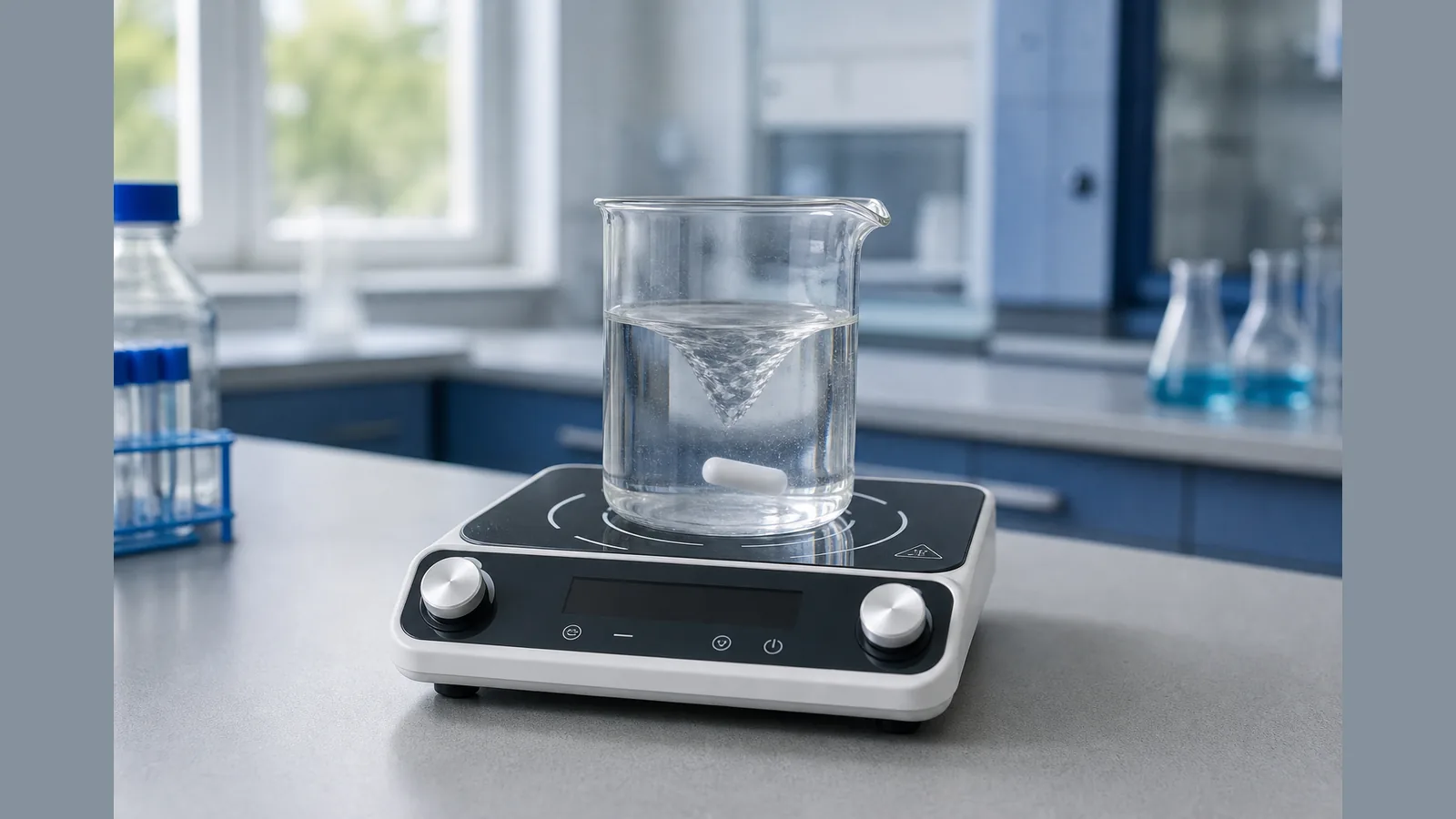
Magnetic stirrer stir bar keeps jumping fix UK: A Practical UK Lab Guide
Direct UK answer first
If your magnetic stirrer stir bar keeps jumping, the usual UK lab fix is to lower the stir speed, centre the vessel on the plate, match the stir bar size to the vessel and liquid, and check that the bar is coupling cleanly with the drive magnet beneath the plate before you raise heat or speed again. Jumping is typically a coupling or set-up problem, not a reason to push unverified performance settings.
What the HS5C-class digital hotplate stirrer is for
An HS5C-class digital hotplate stirrer is aimed at laboratory mixing where you need controlled stirring and optional heating on a ceramic top plate, with an external temperature probe for closer control of the vessel contents. A listing-verified example in this class is the JOANLAB HS5C digital hotplate stirrer, positioned with a ceramic plate, an external temperature probe, and a stated 3 L class capacity. That kind of unit suits routine aqueous mixing and heated stirring when your local procedure allows it—not as a substitute for written COSHH assessments or standard operating procedures.
Stirring itself depends on the internal drive magnet under the top plate rotating the stir bar inside the vessel. Coupling strength is affected by magnet alignment, vessel size, and liquid viscosity, which is why a bar that “jumps” often loses lock when speed, geometry, or load is wrong.
Claim-safe specs: only listing-verified plate/RPM/probe facts
Keep claims tightly tied to what the product listing actually states. For the JOANLAB HS5C-class unit referenced here, verified listing points are:
- Digital hotplate stirrer format
- Ceramic plate
- External temperature probe
- Stated 3 L class capacity
Do not assume a maximum temperature or RPM figure unless it appears in the verified on-site listing text. When a stir bar jumps, raising speed “because the plate should handle it” is unsafe reasoning if those limits are not confirmed on the product page.
Stir bars themselves are commonly PTFE-coated and sold in a range of sizes and shapes for laboratory mixing; choose a bar that sits flat, matches the flask diameter, and couples without rattling before you rely on heat or higher speed.
Safety and lab practice notes
Treat jumping as a warning that coupling or vessel set-up is unstable. Stop or reduce speed, check the vessel is centred and stable, and confirm the bar is intact and free of debris. Heating while a bar is bouncing can splash, crack glassware, or give uneven temperature readings at the probe.
This guidance is general lab practice framing only. It is not a substitute for your organisation’s COSHH assessment, risk assessment, or local SOP.
Use appropriate PPE, secure the vessel, and follow local rules for heated stirring and chemical handling.
Checklist or decision steps
- Stop or reduce speed until the bar stops jumping.
- Centre the vessel on the ceramic plate and keep the base flat.
- Confirm stir-bar length and shape suit the vessel; swap to a better-matched PTFE-coated bar if needed.
- Restart at a low speed and increase only while coupling remains smooth.
- If heating is required, use the external temperature probe as directed by your procedure—and only within listing-verified operating information.
- If jumping returns at modest speed, reassess viscosity, fill level, vessel type, and bar condition before continuing.
Next step to product detail
If you need a digital hotplate stirrer in the HS5C class with a ceramic plate, external temperature probe, and stated 3 L class capacity, review the current product details for the digital magnetic stirrer hot plate (3 L class) and confirm the listing-verified facts against your method before purchase or use.
FAQ
Why does a magnetic stir bar jump?
Most often the drive magnet and bar lose coupling because speed is too high for the vessel, load, or bar size, or because the flask is off-centre. Viscosity and vessel geometry also matter.
Should I increase RPM to “force” the bar to catch?
No. Increase only after the bar is locked at a lower speed. Use confirmed details or assume a maximum RPM beyond verified listing text.
Does a ceramic plate or external probe stop jumping?
They support heating and temperature monitoring in an HS5C-class set-up; they do not replace correct bar selection, centring, and speed control.
Where can I check the product facts for this class of stirrer?
Use the on-site listing for the digital magnetic stirrer hot plate (3 L class) and stick to the plate, probe, and capacity details stated there.