Pre-purchase checklist digital hotplate stirrer UK: A Practical UK Lab Guide
Direct UK answer first
A practical pre-purchase checklist digital hotplate stirrer UK buyers can use is simple: confirm you need combined heating and magnetic mixing, match vessel volume to a stated capacity class (for example a 3L-class unit), check that the plate type and any external temperature probe suit your method, and only then compare digital controls and lab-safety fit — without relying on unverified temperature or speed claims.
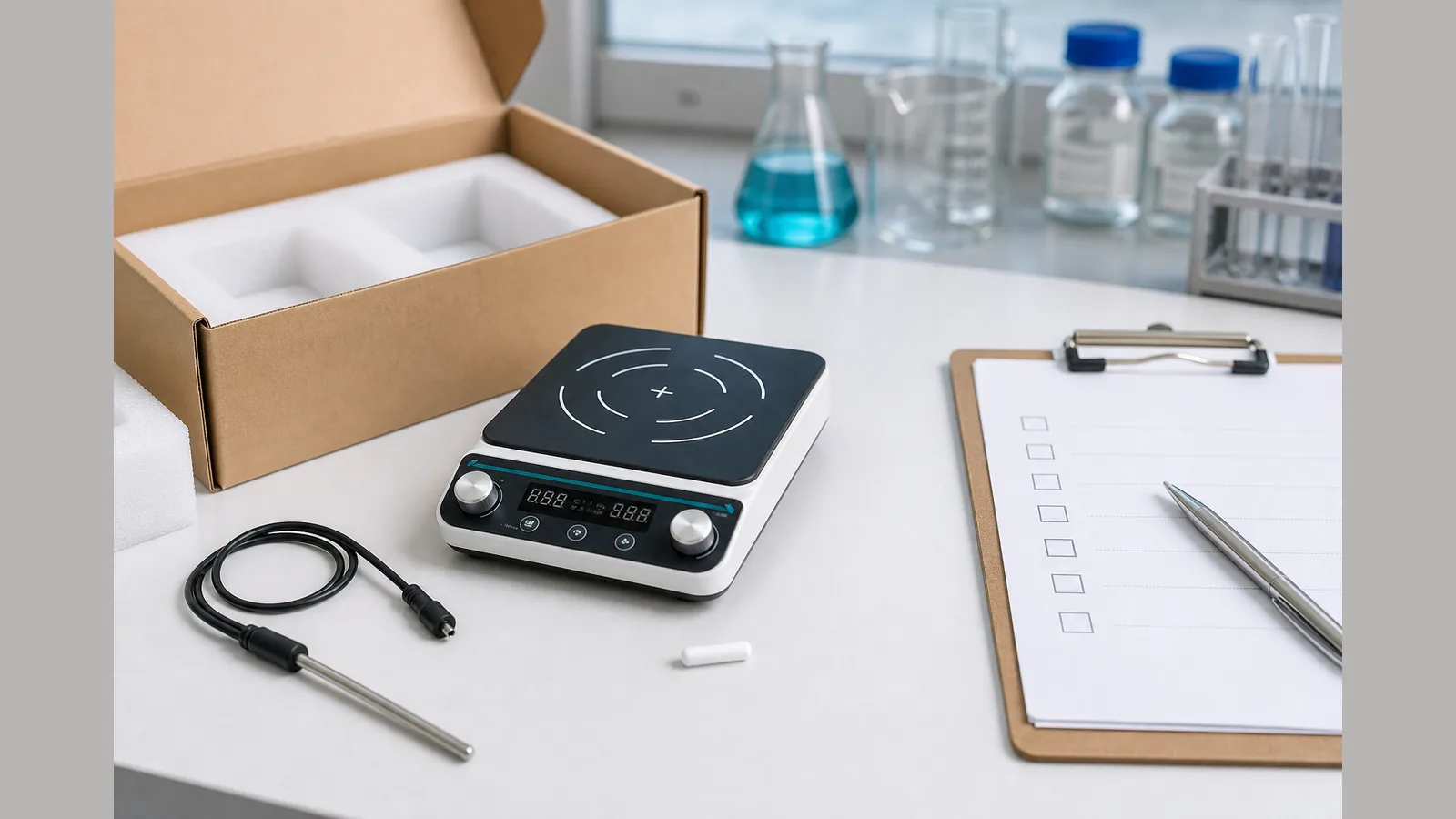
A magnetic stirrer with hot plate is a benchtop unit that heats and mixes a liquid at the same time: a motor spins a magnet under a heated plate, which turns a PTFE stir bar in your vessel. When buying for a UK lab, start with that dual role and work through the checklist below rather than shopping on feature lists alone.
What the HS5C-class digital hotplate stirrer is for
An HS5C-class digital hotplate stirrer is aimed at routine benchtop work where you need simultaneous heating and stirring in one footprint. Lab guides note that a hotplate alone, a hotplate stirrer, or a stirrer without heating may each suit different workloads; combined units are useful when mixing and warming belong in the same step, while high sample throughput or specialised mixing may call for a different set-up.
Among laboratory operations, mixing is often essential, and the market offers many magnetic stirrer varieties. Selecting the most appropriate unit for qualitative work means matching the instrument class to your vessels, media, and control needs before you buy.
Claim-safe specs: only listing-verified plate/RPM/probe facts
For the JOANLAB HS5C digital hotplate stirrer as positioned on the product listing, the claim-safe facts you can rely on here are limited to:
- a ceramic plate
- an external temperature probe
- a stated 3L-class capacity
Do not treat maximum plate temperature or stirring speed as settled from this article. Use the current product details for any further listing text, and avoid copying unverified max temperature or RPM figures into tenders or SOPs.
Safety and lab practice notes
Treat manufacturer instructions and your local COSHH assessments and SOPs as the authority for safe use. This guide is not a substitute for local risk assessment. In practice, plan for hot surfaces, secure vessels, compatible stir bars, and supervised heating — and ensure probe placement and setpoints follow your method, not marketing copy.
Checklist or decision steps
- Confirm you need combined heating and magnetic stirring, not a hotplate-only or stirrer-only instrument.
- Match typical vessel volume to a stated capacity class (for example 3L-class) with headroom for your media.
- Prefer listing-verified plate material (here: ceramic) that fits your cleaning and chemical context.
- Decide whether an external temperature probe is required for your method control.
- Prefer digital readouts and controls only after the above fit is clear.
- Record only verified listing facts in purchase paperwork; leave unverified max temperature or RPM blank until confirmed on-site.
- Align the purchase with local COSHH/SOP owners before ordering.
Next step to product detail
If an HS5C-class digital unit with a ceramic plate, external temperature probe, and stated 3L-class capacity matches your checklist, review the JOANLAB HS5C digital magnetic stirrer hot plate (3L class) product detail before you decide.
FAQ
What should a UK pre-purchase checklist cover first?
Confirm the need for combined heating and stirring, then capacity class, plate type, probe needs, and local safety fit — in that order.
Which HS5C listing facts are safe to cite here?
Ceramic plate, external temperature probe, and stated 3L-class capacity. Use confirmed details maximum temperature or RPM beyond verified listing text.
Is this guide a substitute for COSHH or SOPs?
No. Use it only as a buying checklist; follow your organisation’s risk assessments and procedures for laboratory work.